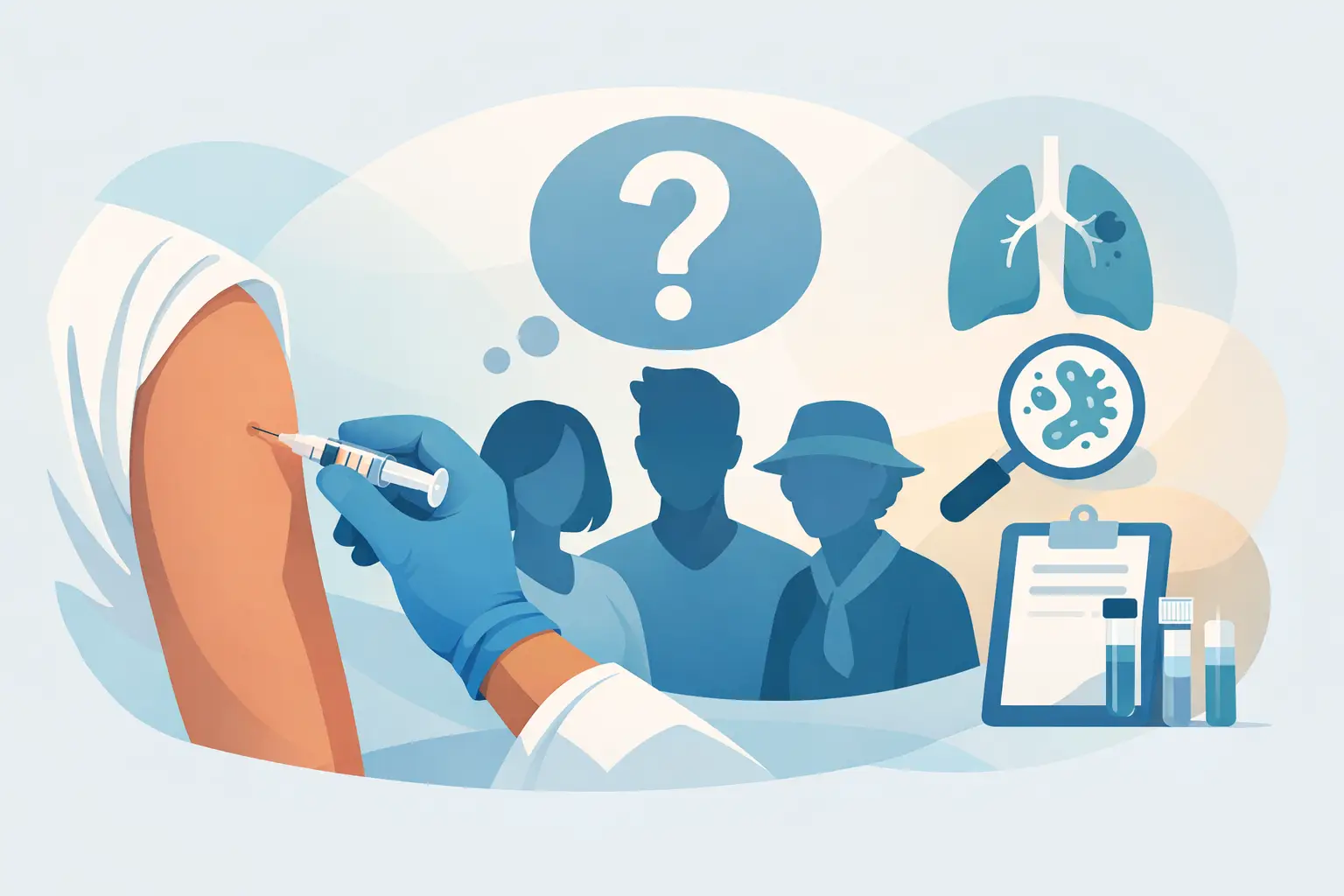
If you are asking who needs a TB skin test, the answer usually comes down to work requirements, school policies, healthcare clearance, or possible exposure to tuberculosis. For many people, testing is not part of routine care. It is usually ordered for a specific reason, and knowing that reason helps you avoid delays with employment, training, or medical paperwork.
A TB skin test, also called a tuberculin skin test or Mantoux test, checks whether your body has been exposed to the bacteria that causes tuberculosis. It does not confirm active TB disease on its own. Instead, it helps identify whether you may have a TB infection and need more assessment.
Who needs a TB skin test for work, school, or clearance
In most outpatient settings, the people who need a TB skin test are those who must meet a formal screening requirement. This often includes healthcare workers, nursing students, medical office staff, caregivers, daycare workers, home care staff, volunteers in healthcare environments, and people entering certain training programs.
Employers and schools often request TB testing before a start date. The reason is practical. They need documentation showing that a student, worker, or volunteer has completed screening according to policy. In these cases, the test is less about symptoms and more about clearance.
Some positions are more likely to require testing because they involve close contact with patients, children, older adults, or people with weakened immune systems. A hospital employee may need baseline screening before orientation. A college student in a clinical placement may need a one-step or two-step TB skin test before being allowed on site. A daycare worker may be asked for screening depending on local or employer rules.
That said, requirements are not identical everywhere. One employer may ask for a TB skin test, while another may accept a blood test or prior documentation. If paperwork is involved, it is worth confirming exactly what form of testing is required before booking.
Who needs a TB skin test after exposure
A person may also need a TB skin test after close contact with someone who has active tuberculosis. This is especially relevant if exposure happened at home, at work, in a shelter setting, or during extended indoor contact. Public health departments and medical providers may recommend testing based on the level and duration of exposure.
Exposure does not automatically mean infection. It means there is enough concern to justify screening. Timing matters here. If testing is done too soon after exposure, the result may not yet reflect infection, so some people need repeat testing several weeks later.
Children, people with weakened immune systems, and household contacts are often assessed more carefully because the risks can be higher. If someone has symptoms such as persistent cough, fever, night sweats, or unexplained weight loss, a skin test alone is not enough. They need prompt medical evaluation.
Who does not usually need routine TB skin testing
Most healthy adults do not need routine TB skin testing unless there is a job, school, volunteer, immigration, or exposure-related reason. It is not typically part of a standard annual physical.
This is where confusion happens. Some people assume a TB skin test is something everyone should have periodically. In reality, testing is usually targeted. Unnecessary testing can create confusion, especially for people who previously received the BCG vaccine or have had a prior positive TB test.
If you have already had a documented positive TB skin test in the past, you generally should not keep repeating skin tests. Once positive, future skin tests may remain positive. In that case, providers usually review your history and may recommend other steps if updated clearance is needed.
When a TB skin test may not be the right test
A TB skin test is common, but it is not always the best option for every patient. Some people may be better suited to a TB blood test, depending on medical history, prior BCG vaccination, or the specific screening requirement.
The skin test also requires two visits. One visit is for placement, and the second is for reading the result 48 to 72 hours later. If you cannot return in that window, the test may need to be repeated. For busy students and working adults, this is often the biggest practical issue.
There are also situations where a skin test is not enough by itself. If a person has symptoms of active TB, abnormal chest imaging, or a history that raises concern, the next step may include a chest X-ray or further medical assessment rather than simple screening alone.
Who needs a two-step TB skin test
Some people asking who needs a TB skin test actually need a two-step TB skin test. This is often required for healthcare workers, students entering clinical placements, and others needing baseline screening for ongoing occupational monitoring.
A two-step test is not the same as getting the same test twice by accident. It is a planned process. If the first test is negative, a second test is placed within a defined time frame to help identify a boosted reaction from past exposure. This gives a more accurate baseline for future workplace or school screening.
If your form specifically says two-step testing, make sure you book enough time to complete it properly. Waiting until the last minute can create problems with orientation deadlines, school registration, or onboarding.
What to expect at the appointment
The test itself is quick. A small amount of testing solution is injected just under the skin of the forearm. After that, you leave the area alone and return in 48 to 72 hours so a healthcare provider can inspect and measure the reaction.
The result is based on the size of the raised area, not whether the spot looks red. That is why self-reading is not considered reliable for official documentation. If your employer or school needs proof, the test has to be read and recorded properly.
You should avoid scratching the area or covering it with anything that may irritate the skin. Normal daily activity is usually fine. If the test is not read within the required time window, it cannot simply be estimated later.
Common situations where TB testing is requested
In day-to-day practice, TB skin tests are often requested for new hires, students in nursing or allied health programs, volunteers entering care facilities, people with known TB exposure, and patients completing medical forms for institutional requirements. Some travel-related or international program applications may also ask for screening, although the exact rules vary.
It is also common for patients to book because a form says they need TB testing but they are not sure whether they need one-step testing, two-step testing, or a different clearance process. That uncertainty is normal. The most efficient approach is to bring any school, workplace, or volunteer paperwork to the visit so the correct testing pathway can be followed.
Important exceptions and special cases
A prior BCG vaccine can affect how skin test results are interpreted, but it does not mean testing should be skipped automatically. A healthcare provider still needs to assess the full picture.
Pregnant patients can often still receive TB screening when indicated, but the reason for testing should be clear. People taking immunosuppressive medication or living with medical conditions that affect the immune system may also need more tailored evaluation because test results can be harder to interpret.
Children may need TB testing in certain circumstances, especially after exposure or for specific school or public health reasons. The decision is more individualized than it is for employment screening in adults.
If you have ever had a severe reaction to a previous TB skin test or have documented prior positive results, let the clinic know before testing is placed. That can prevent repeat testing that is unnecessary or inappropriate.
Getting the right TB test without delays
The main question is not just who needs a TB skin test, but why it is being requested. Once that is clear, the process becomes much easier. Clearance for work or school, recent exposure, or baseline healthcare screening are the most common reasons.
For patients who need fast, straightforward access to testing and documentation, a clinic that handles routine medical forms and occupational health requirements can save time. At Twin Mills Medical Center, that kind of practical access matters because patients are often balancing work deadlines, class start dates, and family schedules.
If you are not sure whether you need a TB skin test, bring your form, your timeline, and any previous TB records with you. The right visit is usually a simple one when the requirements are clear, and getting ahead of it early is the easiest way to avoid last-minute problems.
Leave a Reply