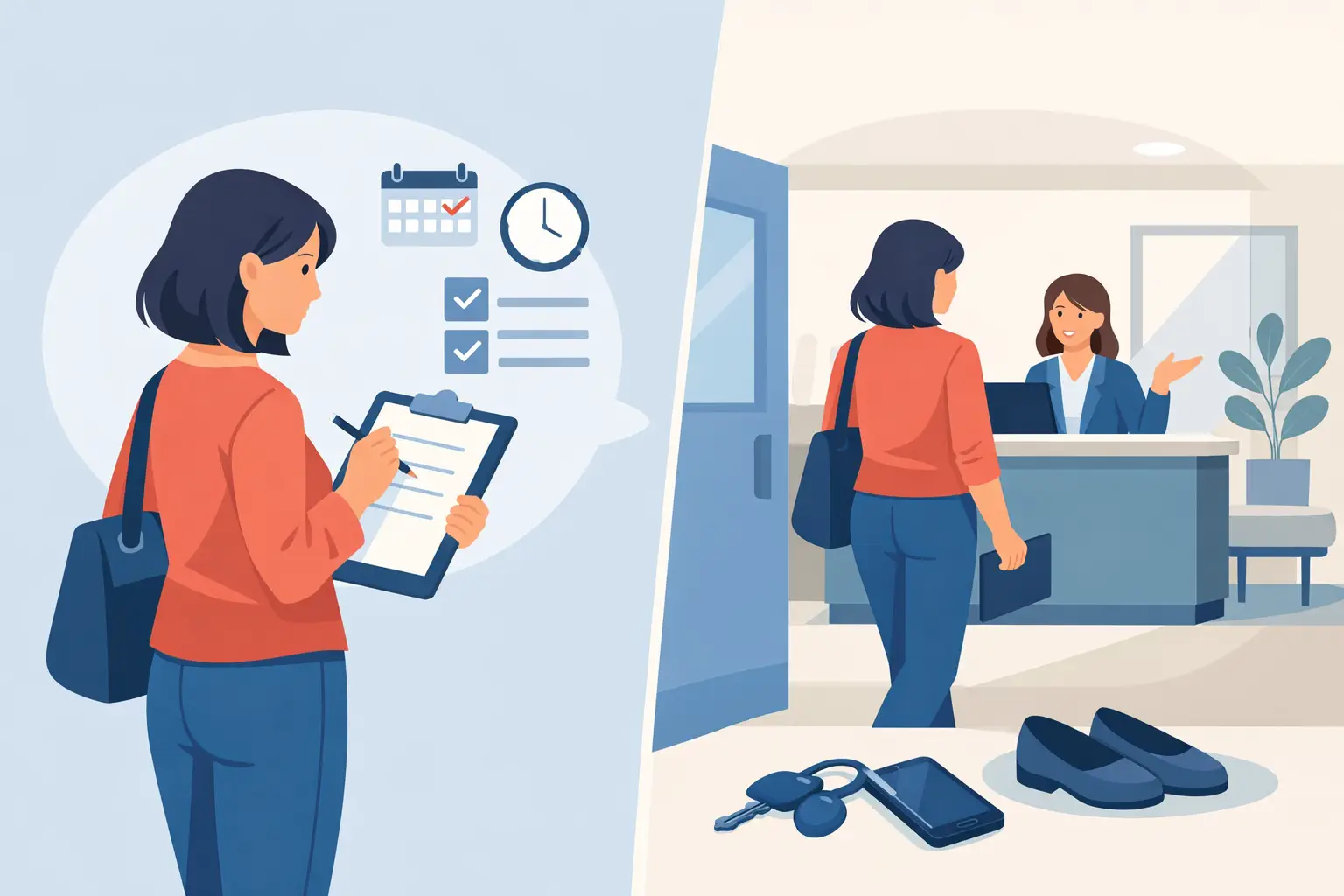
Walk-in care works best when you arrive ready to be assessed, treated, and moved to the next step without delay. If you need to prepare for walk in visit care, the goal is simple – bring the right information, understand what the clinic can address, and know when a walk-in visit is the right choice.
For many patients, the difference between a smooth visit and a frustrating one comes down to a few practical details. A forgotten health card, an incomplete medication list, or uncertainty about symptoms can slow registration and clinical decision-making. A little preparation helps the care team focus on your medical concern sooner.
Why it helps to prepare for walk in visit care
Walk-in services are designed for timely care of non-emergency concerns. That usually means minor illnesses, straightforward infections, skin issues, prescription questions, basic assessments, forms, and other problems that should be seen soon but do not require the emergency room.
Because walk-in care is built around same-day access, clinics need clear information quickly. When patients arrive prepared, staff can verify identity, confirm coverage, document symptoms accurately, and direct the visit appropriately. That improves efficiency, but more importantly, it supports safer care.
Preparation also helps set expectations. A walk-in clinic can often manage a wide range of common concerns, but not every issue can be fully diagnosed or treated in one visit. Some cases need follow-up with a family doctor, imaging, lab work, rehabilitation support, or referral to a specialist. Knowing that in advance makes the visit more productive.
What to bring to a walk-in appointment
Start with your health insurance card and one piece of identification if needed. If your concern involves workplace injury forms, school forms, driver medical paperwork, immunization records, or testing documentation, bring those with you rather than assuming the clinic will already have them.
You should also bring an up-to-date list of medications. Include prescription drugs, over-the-counter products, inhalers, creams, vitamins, and supplements. If you do not know the names, taking clear photos of the labels is often enough to help the clinician confirm what you are using.
If you have relevant medical records, discharge papers, test results, or imaging reports from a recent visit elsewhere, bring those too. This is especially helpful if your issue is ongoing rather than brand new. Walk-in care is often faster when the clinician can see what has already been tried.
Parents should be prepared with a child’s health card, current medication list, allergy information, and basic symptom timing. For younger children, it also helps to know fever readings, when medication was last given, and whether the child is eating, drinking, and urinating normally.
Know your symptoms before you arrive
One of the most useful ways to prepare for walk in visit care is to organize the story of your symptoms before check-in. You do not need medical language. You do need a clear timeline.
Be ready to explain when the problem started, whether it is getting better or worse, what it feels like, and what you have already tried. If you have a cough, know how long it has lasted and whether you have fever, shortness of breath, or chest pain. If you have pain, be ready to say where it is, what makes it worse, and whether it is affecting sleep, movement, or work.
Photos can help in some cases. If a rash changes during the day, if swelling comes and goes, or if a skin issue looked worse at home than it does on arrival, a time-stamped photo may give useful context. The same applies to home temperature readings or blood pressure records when relevant.
This kind of preparation is not about making your visit sound more serious. It is about helping the clinician assess the issue efficiently and decide what should happen next.
Understand what walk-in care can and cannot do
Walk-in clinics are a strong option for many everyday health concerns, but they are not a replacement for emergency care. Chest pain, severe shortness of breath, stroke symptoms, heavy bleeding, major trauma, seizures, or signs of a life-threatening reaction require emergency assessment, not a routine walk-in queue.
There is also a middle ground where the answer depends on severity and timing. A minor cut may be suitable for walk-in treatment. A deep wound with uncontrolled bleeding may not be. A sore throat may be appropriate for same-day clinic care. Trouble swallowing with breathing difficulty is not.
Administrative and preventive services may also be available in a clinic setting, but these sometimes follow different workflows than illness visits. Driver exams, TB testing, immunizations, workplace forms, and similar services may require specific timing, documentation, or fees. If your main reason for attending is administrative rather than urgent, it helps to confirm the process before you arrive.
Plan for timing and wait expectations
Walk-in care is convenient, but it does not always mean immediate. Wait times can vary based on patient volume, the complexity of cases ahead of you, staffing levels, and whether urgent patients need to be seen first.
If your schedule is tight, arriving earlier in the day may help. It is also smart to allow more time than you think you will need, especially if your concern may require a procedure, a form, a prescription discussion, or coordination with another service in the clinic.
Bring your phone charger, keep your ringer on, and stay close enough to hear your name if the clinic uses in-person call-up. If your symptoms worsen while waiting, tell reception promptly. Clinical urgency can change, and staff need accurate updates.
Food, hydration, and comfort matter too. If you are bringing a child, pack what you need to manage the wait calmly. If you are attending for a musculoskeletal problem, wear clothing that makes examination easier. A shoulder complaint is simpler to assess in a loose top than in restrictive layers.
Practical details that speed up the visit
Registration is usually faster when personal details are current. Be ready to confirm your address, phone number, family doctor information if you have one, and pharmacy preference. Small gaps in administrative information often create unnecessary delays later, especially when prescriptions, forms, or follow-up calls are involved.
It also helps to be clear about your goal for the visit. Some patients want symptom relief. Others need a diagnosis, a refill, a note for work, or advice on whether they can return to normal activity. Saying that early helps the clinician structure the appointment and explain what can reasonably be done during a walk-in encounter.
Be honest about sensitive details. That includes pregnancy possibility, sexual health concerns, substance use, medication non-adherence, and symptoms you may feel embarrassed to mention. In outpatient care, accurate information is often the fastest route to appropriate treatment.
If you need forms, testing, or follow-up
Not every walk-in visit ends at the exam room door. You may leave with a prescription, a testing requisition, self-care instructions, a specialist referral, a work note, or advice to return if symptoms persist. The most prepared patients are the ones who listen for the next step and make sure they understand it before leaving.
Ask practical questions. When should you expect results? What symptoms should prompt a return visit? If the medication does not help, what should you do next? If a form is being completed, when will it be ready and is anything still missing?
This matters even more in clinics that offer integrated services. A patient may come for a minor illness but also need pharmacy support, rehabilitation planning, testing, or follow-up for a recurring issue. In a setting like Twin Mills Medical Center, where multiple services are available in one location, patients often benefit from asking whether the next step can be handled during the same care pathway rather than through a separate search elsewhere.
When a little preparation makes a big difference
Walk-in care is meant to reduce barriers, not create extra work for patients. You do not need a perfect file folder or a detailed medical spreadsheet. You just need the basics covered – your identification, your medications, your symptom timeline, and a realistic understanding of what the visit is for.
If you prepare for walk in visit care this way, the process is usually faster, clearer, and more useful. You give the clinic what it needs to help you, and you leave with a better sense of what happens next. When care is accessible and organized from the start, even a same-day visit can feel structured and dependable.
Leave a Reply