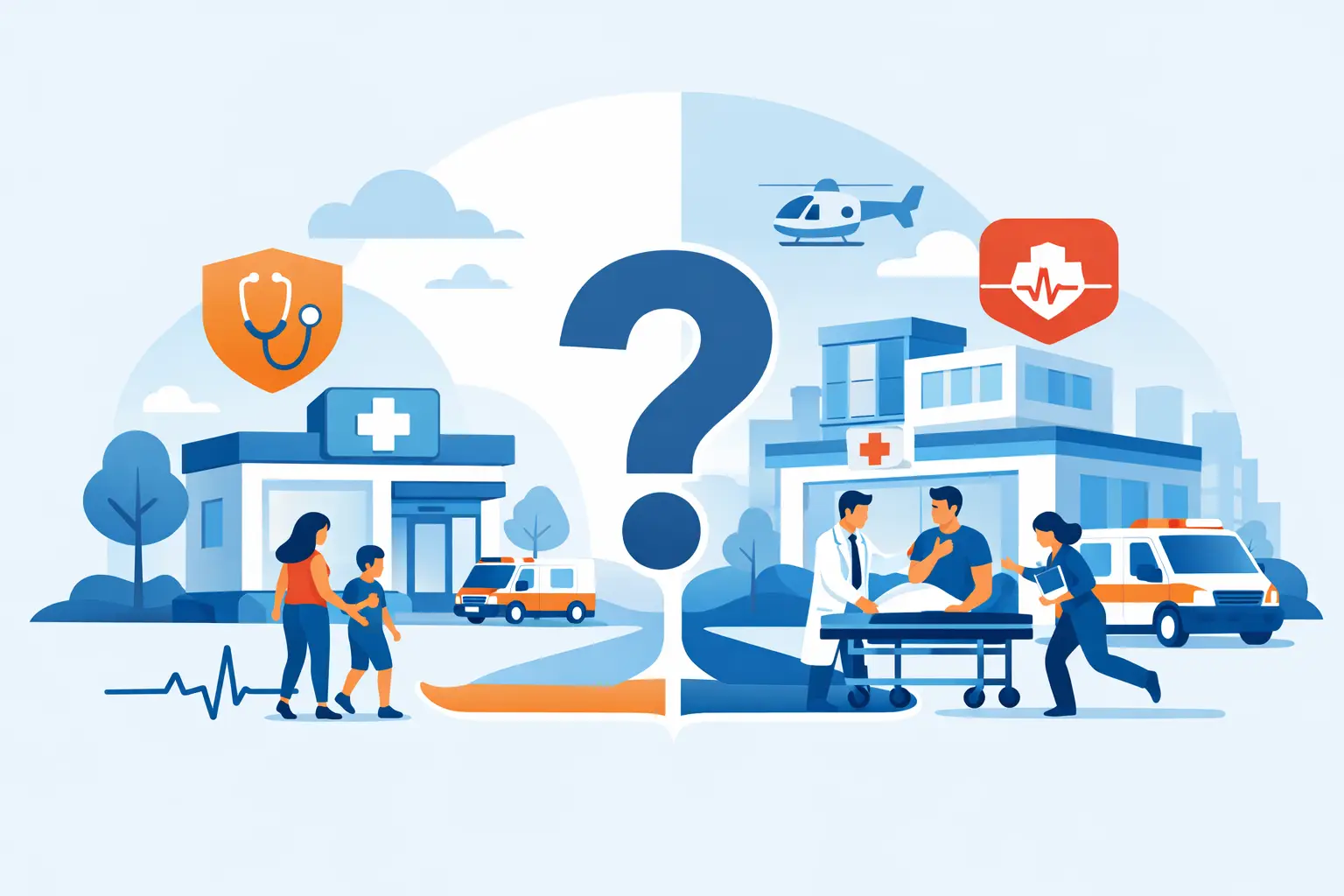
A fever late at night, a deep cut from cooking, sudden chest pain on the way home from work – not every medical problem belongs in the same place. If you are deciding between urgent care or emergency room care, the right choice depends on how serious the symptoms are, how quickly they are getting worse, and whether there is any immediate risk to life or limb.
For most people, the hardest part is not getting care. It is deciding where to go under pressure. When symptoms are painful, unexpected, or affecting a child or older adult, it is easy to second-guess yourself. A clear understanding of what each setting is meant to treat can help you act faster and avoid delays.
Urgent care or emergency room: the basic difference
Urgent care is designed for medical issues that need prompt attention but are not usually life-threatening. These are problems that should be seen the same day, but do not typically require advanced hospital-level equipment, trauma support, or emergency surgery.
The emergency room is built for severe symptoms, sudden deterioration, major injuries, and situations where minutes matter. ER teams can evaluate and stabilize serious conditions such as stroke, heart attack, severe breathing problems, major bleeding, or significant trauma.
A useful way to think about it is this: urgent care handles many non-emergency problems that cannot wait for a routine primary care visit, while the emergency room handles conditions that may put your health, safety, or long-term function at immediate risk.
When urgent care is usually the right choice
Urgent care is often appropriate when you need same-day treatment for a minor to moderate illness or injury. Common examples include sore throat, ear pain, fever without severe distress, mild asthma symptoms, urinary symptoms, pink eye, minor burns, simple cuts that may need closure, sprains, strains, rashes, and vomiting or diarrhea without signs of severe dehydration.
It can also be a good fit for practical healthcare needs that still require prompt attention, such as workplace injury assessments, basic infection treatment, prescription renewals in certain situations, or follow-up for symptoms that are uncomfortable but stable.
The benefit of urgent care is efficiency. Patients are seen for concerns that need timely medical attention without using emergency resources meant for the most critical cases. For families and working adults, that often means faster access for common problems and a more straightforward care experience.
That said, urgent care has limits. If a condition appears stable at first but worsens quickly, the right place can change. A fever with mild fatigue may fit urgent care. A fever with confusion, difficulty breathing, or an infant who is hard to wake up does not.
Symptoms that often fit urgent care
Many everyday health concerns fall into this category. A painful sinus infection, a minor skin infection, an ankle sprain, a cough that is lingering, or a child with ear pain but normal breathing and alertness are all examples where urgent evaluation may help without requiring the ER.
This is also where a community medical clinic can be especially useful. At Twin Mills Medical Center, patients can access walk-in care for many non-emergency concerns while also having the option to connect with broader services in one location when follow-up is needed.
When the emergency room is the safer choice
Go to the emergency room, or call 911, for symptoms that could signal a serious or life-threatening condition. Chest pain, sudden shortness of breath, signs of stroke, seizures, major head injury, severe allergic reaction, uncontrolled bleeding, loss of consciousness, serious burns, and broken bones with visible deformity all belong in the ER.
The same is true for severe abdominal pain, sudden confusion, weakness on one side of the body, blue lips, coughing up large amounts of blood, or any injury after a major car crash or fall. In these situations, waiting to see whether symptoms improve can create unnecessary risk.
Parents often face difficult judgment calls with children. A child with a mild fever and normal activity may be appropriate for urgent care. A child who is struggling to breathe, having a seizure, showing signs of dehydration, or becoming difficult to wake up should be evaluated in the emergency room right away.
Red flags that should not wait
Some symptoms deserve urgent escalation even if the cause is unclear. Sudden facial drooping, slurred speech, fainting, severe chest pressure, rapidly spreading swelling, or a severe headache with neurologic symptoms are all reasons to choose emergency care. The exact diagnosis matters less in that moment than the level of danger.
If you are not sure whether a symptom is severe enough, it is safer to overestimate the risk when there are signs of breathing trouble, altered mental status, heavy bleeding, or sudden neurological change.
The gray area: when it depends
Not every situation is obvious. A cut may be manageable in urgent care if bleeding is controlled and the injury is straightforward. The same cut may need the ER if it is deep, spurting blood, exposing bone or tendon, or causing loss of movement.
Abdominal pain is another common gray area. Mild to moderate pain without red-flag symptoms may be evaluated in urgent care, especially if it has developed gradually and the person is otherwise stable. But severe, sudden, or worsening abdominal pain, especially with vomiting, fainting, fever, pregnancy, or inability to keep fluids down, may require emergency evaluation.
Breathing symptoms also vary. Mild wheezing in someone who is speaking normally may fit urgent care. Struggling to talk, chest retractions, blue discoloration, or worsening shortness of breath requires the ER.
This is where context matters. Age, medical history, pregnancy, immune status, and how rapidly symptoms are changing can shift the decision. The same symptom can be low risk in one patient and high risk in another.
Why choosing the right setting matters
Going to the right level of care helps you get attention that matches the problem. If you go to urgent care for a life-threatening condition, you may lose time that should be spent in a hospital setting. If you go to the emergency room for a minor illness or injury, you may face longer waits because emergency teams must prioritize the sickest patients first.
There is also a continuity benefit with outpatient care. For non-emergency issues, being seen in a clinic setting can make follow-up easier, especially if you need repeat visits, medication review, rehabilitation support, forms, vaccines, or ongoing primary care.
Patients are often not choosing between good care and bad care. They are choosing between different types of care, each built for a different level of need.
A simple way to decide in the moment
Start with the most important question: could this be immediately dangerous? If the answer might be yes, choose the emergency room. Danger signs include trouble breathing, chest pain, severe bleeding, confusion, seizure, stroke symptoms, major injury, or severe sudden pain.
If the issue feels urgent but stable, urgent care may be appropriate. Think infections, minor injuries, rashes, flu-like illness, painful but non-severe symptoms, or concerns that need same-day attention but do not appear life-threatening.
If you are still uncertain, do not let indecision become the biggest problem. Seek help promptly based on the highest-risk symptom present. It is better to act than to wait too long because you hoped symptoms would sort themselves out.
What families should keep in mind
For households with children, older adults, or family members managing chronic conditions, planning ahead helps. Know where to go for walk-in care, know which symptoms are ER-level emergencies, and know which medications and health conditions could change the urgency of a problem.
This matters during evenings, weekends, and busy workdays when routine offices may not be available. Quick decisions are easier when you already understand the difference between same-day outpatient care and hospital emergency care.
If your symptoms are severe, sudden, or dangerous, choose the emergency room without delay. If your problem needs prompt care but is not an emergency, urgent care may be the more appropriate and efficient option. The goal is simple: get the right care, in the right place, as quickly as possible.
Leave a Reply