
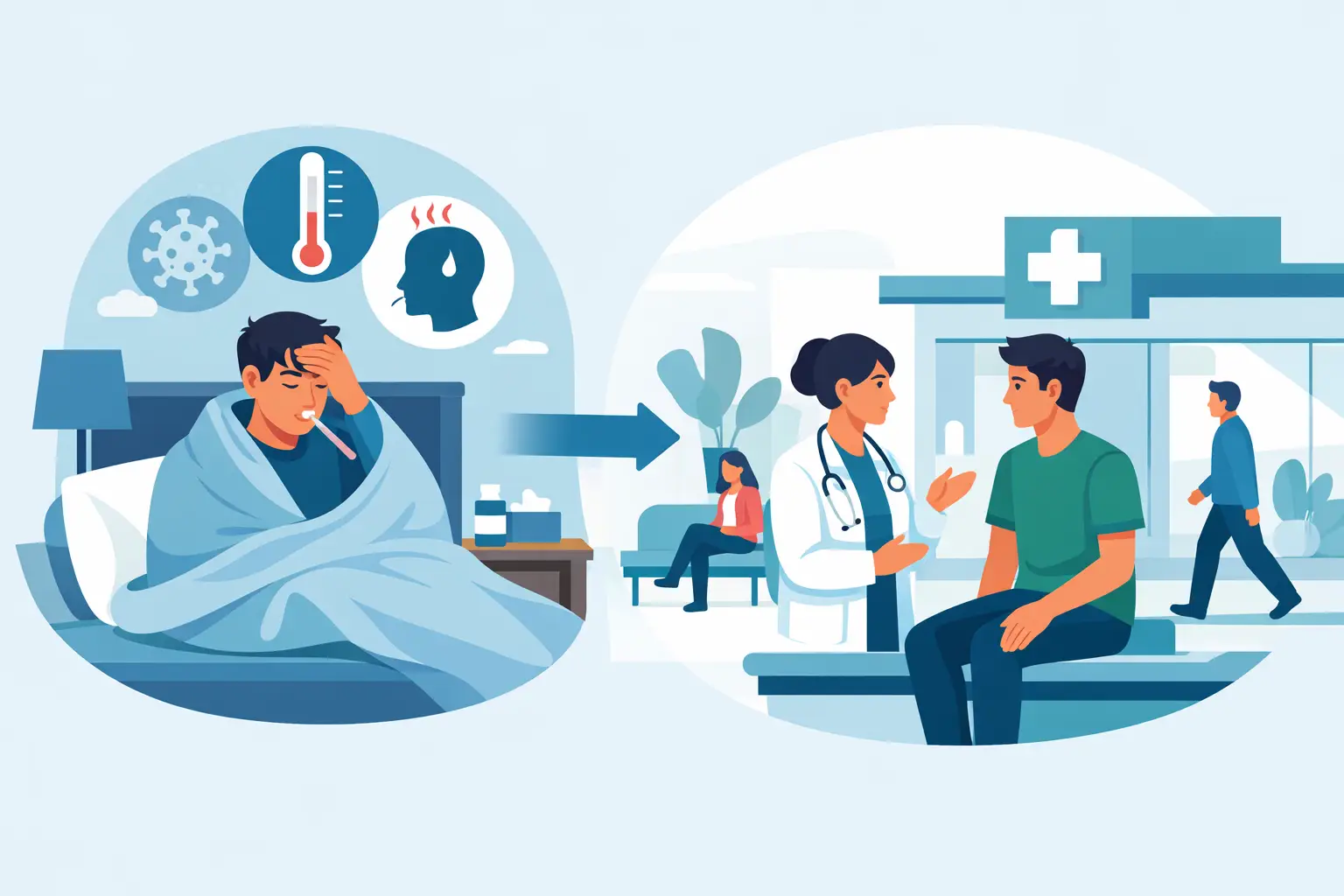
A fever at 8 p.m. on a work night, a child who feels hot on Saturday morning, or chills that start halfway through the day can leave you making a quick decision: wait it out, call your doctor, or visit a walk in clinic for fever. In many cases, a walk-in visit is the practical next step when symptoms need medical attention but do not clearly require the emergency room.
Fever is a symptom, not a diagnosis. It can come with common viral illnesses, strep throat, ear infections, urinary tract infections, influenza, COVID-19, or other short-term conditions that need assessment and treatment. What matters most is the full picture – your temperature, how long the fever has lasted, your age, your medical history, and any symptoms happening alongside it.
When a walk in clinic for fever makes sense
A walk-in clinic is often the right choice when fever is uncomfortable, persistent, or paired with symptoms that should be assessed soon but are not severe enough for emergency care. This includes fever with sore throat, cough, sinus pain, body aches, mild shortness of breath, ear pain, painful urination, nausea, or fatigue that is making it difficult to function normally.
For adults, many fevers caused by common infections can be evaluated in an outpatient setting. A clinician can review symptoms, check vital signs, examine the throat, ears, lungs, and abdomen, and decide whether you likely have a viral illness, a bacterial infection, or a condition that needs further testing. If treatment is needed, the visit can often move quickly from assessment to a care plan.
For children, the decision can feel more stressful. A child with fever may simply have a routine viral illness, but parents are often trying to judge energy level, hydration, and whether symptoms are getting worse. A walk-in visit is helpful when a child is drinking less, complaining of ear or throat pain, has fever that keeps returning, or is not improving as expected.
What a clinic can evaluate during a fever visit
A fever visit is not only about checking the temperature. The main goal is to identify the likely cause and determine whether the illness can be managed safely with outpatient care.
During the appointment, a provider will usually ask when the fever started, the highest temperature recorded, what medications have been taken, whether there has been recent travel or sick contact, and whether there are symptoms such as cough, congestion, rash, vomiting, diarrhea, pain with urination, or neck stiffness. That history matters because the same temperature can mean very different things depending on the rest of the symptoms.
The physical exam helps narrow things down. Red swollen tonsils may point toward a throat infection. Crackling in the lungs may suggest pneumonia. Lower abdominal tenderness could raise concern for an infection or another cause of fever. In some cases, testing may be appropriate, such as a rapid swab, urinalysis, or referral for imaging or lab work if symptoms suggest a more serious issue.
This is where an established, multi-service clinic can be especially useful. Patients often want care that is immediate but also organized. At Twin Mills Medical Centre, the value of same-day access is not just speed. It is the ability to be assessed, treated, and directed to the next step without unnecessary delays.
When fever should go to urgent or emergency care instead
A walk-in clinic for fever is appropriate for many everyday illnesses, but not every fever should be handled in a standard outpatient setting. Some situations need higher-level care right away.
Emergency evaluation is generally the better choice if fever comes with chest pain, severe trouble breathing, confusion, fainting, seizures, severe dehydration, a blue or gray appearance, a stiff neck with extreme headache, or a rapidly spreading rash. The same is true for infants under 3 months with fever, or for anyone whose condition is worsening quickly.
There are also middle-ground cases where it depends. Someone with a high fever and significant weakness may still be safe for walk-in assessment if they are alert, breathing comfortably, and able to drink fluids. But if the person is frail, elderly, immunocompromised, pregnant, or has complex medical conditions, the threshold for urgent care is lower. The symptom itself is only part of the decision.
If you are unsure, think less about the number on the thermometer and more about how sick the person looks and feels. A moderate fever with severe symptoms is more concerning than a higher fever with mild cold symptoms.
How long is too long to wait?
Not every fever needs same-day medical care. Some short-lived fevers improve within a day or two with rest, fluids, and fever-reducing medication. But when the fever is lasting longer than expected or symptoms are becoming more uncomfortable, waiting may no longer be the best plan.
For adults, it is reasonable to seek care sooner if fever persists beyond a couple of days, keeps returning, or is interfering with work, sleep, or hydration. For children, duration matters too, but behavior matters just as much. If a child is lethargic, hard to wake, not drinking, or showing signs of pain, that justifies prompt assessment even if the fever started recently.
One common mistake is assuming that fever alone tells you whether the illness is serious. It does not. A lower fever can still come from an infection that needs treatment, and a higher fever can happen with a routine virus. The better question is whether the full pattern of symptoms is improving, stable, or getting worse.
What to expect at a walk-in clinic for fever
Patients often delay care because they expect a long, complicated visit. In reality, fever visits at a walk-in clinic are usually focused and efficient.
You should be prepared to share when symptoms began, whether the fever was measured by mouth, ear, forehead, or another method, what over-the-counter medication has been used, and whether it helped. If the patient is a child, bringing a short timeline of temperatures, fluid intake, and symptoms can make the visit more efficient.
The provider may recommend supportive care only, especially if the illness appears viral and there are no warning signs. That can include rest, fluids, acetaminophen or ibuprofen when appropriate, and monitoring specific symptoms at home. If a bacterial infection is suspected, treatment may be prescribed. If the findings suggest something that cannot be fully addressed in clinic, the next step may be urgent referral, imaging, or emergency assessment.
That balance matters. Good fever care is not about prescribing medication every time. It is about making a careful decision about what is likely going on, what can be treated safely now, and what should be watched closely.
Fever in adults, children, and older patients
The same symptom can carry different concerns depending on age. In healthy adults, fever often comes from short-term infections that improve with time and symptom care. In children, the challenge is often hydration, comfort, and identifying ear, throat, or respiratory infections. In older adults, fever may be less dramatic even when the underlying illness is more significant.
Older patients may not mount a strong fever despite having pneumonia, a urinary infection, or another condition that needs prompt treatment. At the same time, weakness, poor appetite, confusion, or reduced mobility may be the signs that matter most. This is one reason outpatient evaluation should consider the person, not just the temperature reading.
Patients with chronic disease, weakened immune systems, or recent surgery also deserve a lower threshold for assessment. A fever after a medical procedure, during cancer treatment, or while taking immunosuppressive medication should not be treated casually.
Practical steps before you come in
If you are planning to visit for fever, a few simple steps help the appointment go more smoothly. Drink fluids if tolerated, avoid overdressing, and write down any medications taken that day. If there is vomiting, diarrhea, cough, sore throat, urinary symptoms, or rash, note when each symptom started.
If possible, bring a list of regular medications and relevant medical conditions. For children, bringing recent temperature readings and the child’s weight can help with medication guidance. If breathing becomes difficult, alertness drops, or severe symptoms develop before the visit, it is safer to seek emergency care rather than wait.
A fever can be a minor illness, the early sign of something that needs treatment, or simply a symptom that needs a professional look because the pattern is not clear. When you need timely assessment without the delays and intensity of the emergency room, a walk-in clinic can provide practical, appropriate care and help you decide on the right next step with confidence.
Leave a Reply