
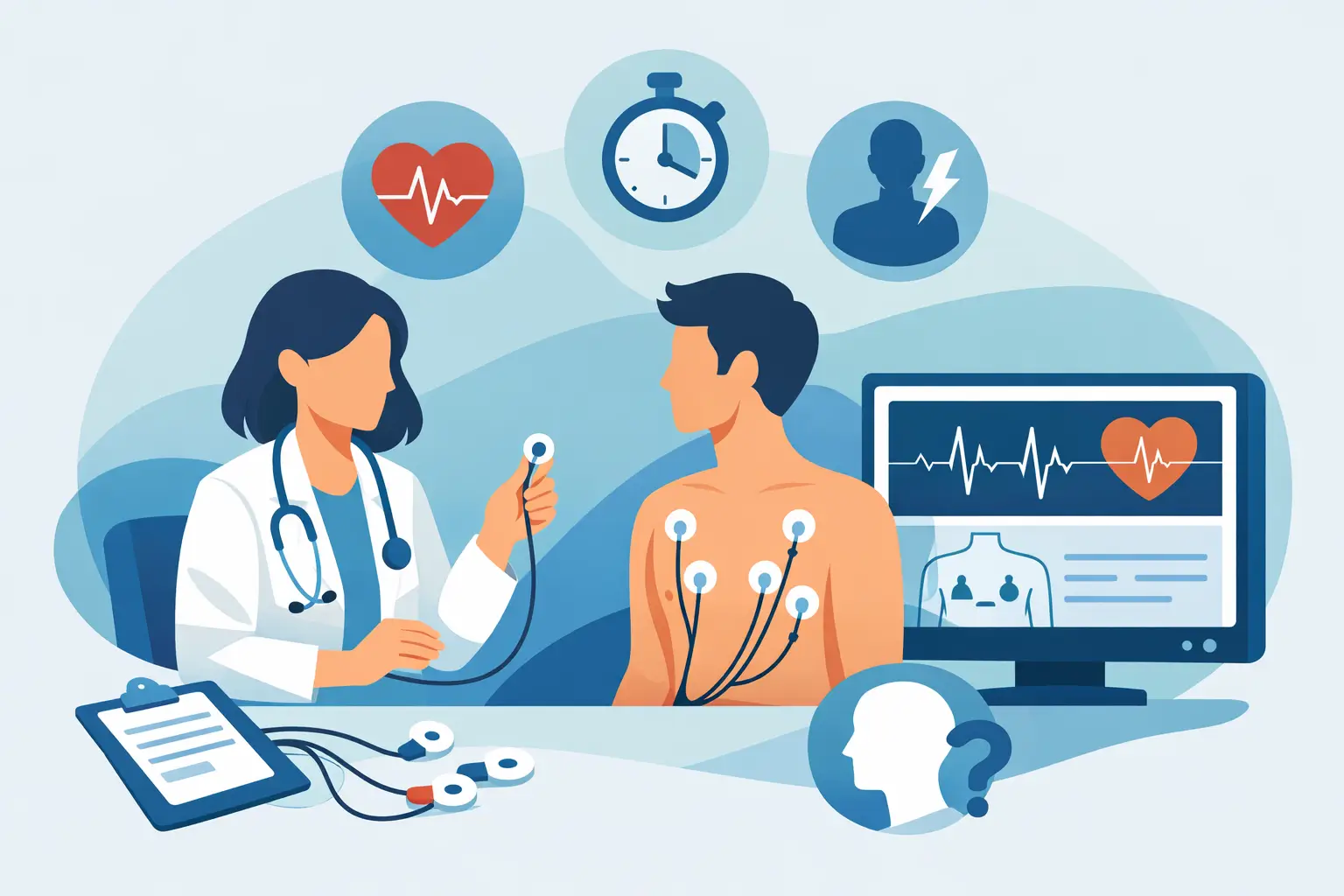
Chest pressure after climbing stairs, a racing heartbeat that comes out of nowhere, or unexplained dizziness can leave people asking the same question: when should I get an ECG? In many cases, an electrocardiogram is a simple first step that helps a medical provider check how your heart is beating and whether there are signs that need closer attention.
An ECG, also called an EKG, records the electrical activity of your heart. It does not diagnose every heart problem on its own, but it can quickly show rhythm issues, signs of a past or current strain on the heart, or changes that suggest further testing is needed. Because it is fast and noninvasive, it is often used in outpatient medical settings when symptoms, medical history, or routine screening concerns point to the need for a closer look.
When should I get an ECG for symptoms?
The clearest reason to get an ECG is when you are having symptoms that could be related to your heart. Not every episode of chest discomfort or fatigue means there is a serious cardiac problem, but certain symptoms should not be brushed off.
An ECG may be appropriate if you have chest pain, chest tightness, shortness of breath, palpitations, lightheadedness, fainting, or a fluttering sensation in your chest. It can also help when symptoms are less dramatic but still concerning, such as unusual fatigue during activity, a pounding heartbeat at rest, or repeated spells of dizziness without an obvious cause.
Timing matters. If symptoms are happening now or happened very recently, the ECG is more likely to show useful changes. If you are having severe chest pain, trouble breathing, sudden weakness, or symptoms that feel like an emergency, emergency care is the right next step rather than waiting for a routine visit.
For milder but persistent symptoms, an outpatient clinic can often assess you promptly. In a setting that offers both primary care and urgent assessment, a provider can decide whether an ECG is enough, whether blood work or imaging is needed, or whether you should be referred for cardiology follow-up.
Situations where an ECG is commonly recommended
There are several everyday clinical situations where a provider may order an ECG even if you are not in immediate distress. One common reason is a new complaint of palpitations. Many people describe this as skipped beats, pounding, or an irregular rhythm. Sometimes the cause is harmless. Sometimes it points to an arrhythmia that needs treatment or monitoring.
Another common reason is high blood pressure, especially if it has been elevated for a while or is difficult to control. An ECG can show whether the heart may be under strain. It may also be used when someone has diabetes, a history of smoking, high cholesterol, or a strong family history of heart disease and is now developing symptoms.
An ECG is also often used before starting or adjusting certain medications. Some drugs can affect heart rhythm, and a baseline ECG helps your provider compare future changes if needed. If you have had a previous heart condition, past heart surgery, or known rhythm issues, repeat ECGs may be part of your routine follow-up.
When should I get an ECG even without symptoms?
This depends on your age, risk factors, and reason for the visit. A healthy person with no symptoms and no cardiac risk factors does not always need an ECG as part of a routine annual checkup. In fact, doing one without a clear reason can sometimes lead to incidental findings that are not dangerous but create unnecessary follow-up.
That said, there are cases where an ECG without active symptoms makes sense. You may need one as part of a pre-employment medical, a driver medical exam, a preoperative assessment, or a specialist workup. Some patients also need an ECG before participating in certain sports or fitness programs if they have a concerning history.
If you are over a certain age, have multiple cardiovascular risk factors, or have symptoms that come and go and happen to be absent during the appointment, a provider may still order an ECG as part of a broader evaluation. The decision is usually based on the whole picture rather than age alone.
What an ECG can and cannot tell you
One of the most common misunderstandings is that a normal ECG means there is no heart problem. That is not always true. An ECG gives a snapshot of your heart’s electrical activity at a specific moment. If your symptoms are intermittent, the tracing may look normal between episodes.
For example, someone with occasional palpitations may have a completely normal ECG during the visit. In that situation, the next step might be a Holter monitor, event monitor, blood work, blood pressure review, or referral for further testing. On the other hand, an ECG can pick up rhythm abnormalities, evidence of enlargement or strain, or changes that suggest reduced blood flow to the heart.
This is why the test works best as part of a clinical assessment. Your symptoms, medical history, medications, family history, and vital signs all matter. The ECG adds useful information, but it is rarely the only piece of information used to make a decision.
Risk factors that make an ECG more relevant
Even if your symptoms seem mild, certain risk factors lower the threshold for getting checked. These include high blood pressure, diabetes, high cholesterol, smoking, obesity, sleep apnea, previous stroke, kidney disease, and a family history of early heart disease or sudden cardiac death.
Age can also play a role, but risk is not limited to older adults. Younger adults can have rhythm disorders, inherited heart conditions, or medication-related changes that deserve evaluation. If you use stimulant medications, energy supplements, or recreational drugs, or if you have a thyroid condition, those factors can also contribute to symptoms that warrant an ECG.
The main point is practical: if symptoms are new, recurring, or out of proportion to your usual health, it is reasonable to be evaluated sooner rather than later.
What to expect when you get an ECG
An ECG is quick and straightforward. Small adhesive electrodes are placed on your chest, arms, and legs. These electrodes record the electrical signals from your heart, and the test usually takes only a few minutes.
There is no recovery time, and the test itself is painless. In many outpatient clinics, the ECG can be done during the same visit when a provider assesses your symptoms. That can make a big difference if you are trying to avoid multiple appointments or delays.
If the ECG is abnormal, the next step depends on what it shows and how you are feeling. Some findings need urgent evaluation. Others simply mean your provider wants additional testing or a cardiology review. If the ECG is normal but your symptoms continue, that does not mean the issue is closed. It usually means the workup needs to match the pattern of your symptoms.
When to seek urgent care instead of waiting
There is a difference between booking an ECG and needing emergency help. If you have severe chest pain, chest pressure that spreads to the arm, jaw, or back, major shortness of breath, fainting, sudden confusion, or signs of a stroke, do not wait for a routine appointment.
The same applies if palpitations come with weakness, near-fainting, or ongoing chest discomfort. In those situations, urgent assessment is the safer choice. An outpatient ECG is useful, but some symptoms need immediate monitoring and treatment.
For less severe concerns, a clinic with walk-in access and on-site diagnostics can be a practical option. At Twin Mills Medical Center, patients can be assessed for symptoms, have appropriate cardiac testing ordered, and get clear next-step guidance in one location.
A practical way to decide
If you are wondering whether your symptoms are significant enough, ask yourself three questions. Is this new for me? Is it happening more than once or getting worse? Does it involve chest discomfort, shortness of breath, dizziness, fainting, or an irregular heartbeat? If the answer is yes to any of these, an ECG may be worth discussing with a medical provider.
You do not need to self-diagnose before getting checked. The more useful approach is to pay attention to changes from your normal baseline and seek care when something feels off, especially if you have known risk factors. A timely ECG can be reassuring when results are normal, and when they are not, it can help move you toward the right care without delay.
If you are unsure, err on the side of being evaluated. It is easier to act on symptoms early than to explain away warning signs that deserved a closer look.
Leave a Reply