
If you have been asked to complete a driver fitness assessment, the first question is usually simple: what is included in a drivers medical exam? Most people want to know how long it takes, what the doctor checks, and whether a medical issue will automatically affect their license. The good news is that the process is usually straightforward. The exam is designed to assess whether a medical condition could affect your ability to drive safely, not to create extra barriers.
What is included in a drivers medical exam?
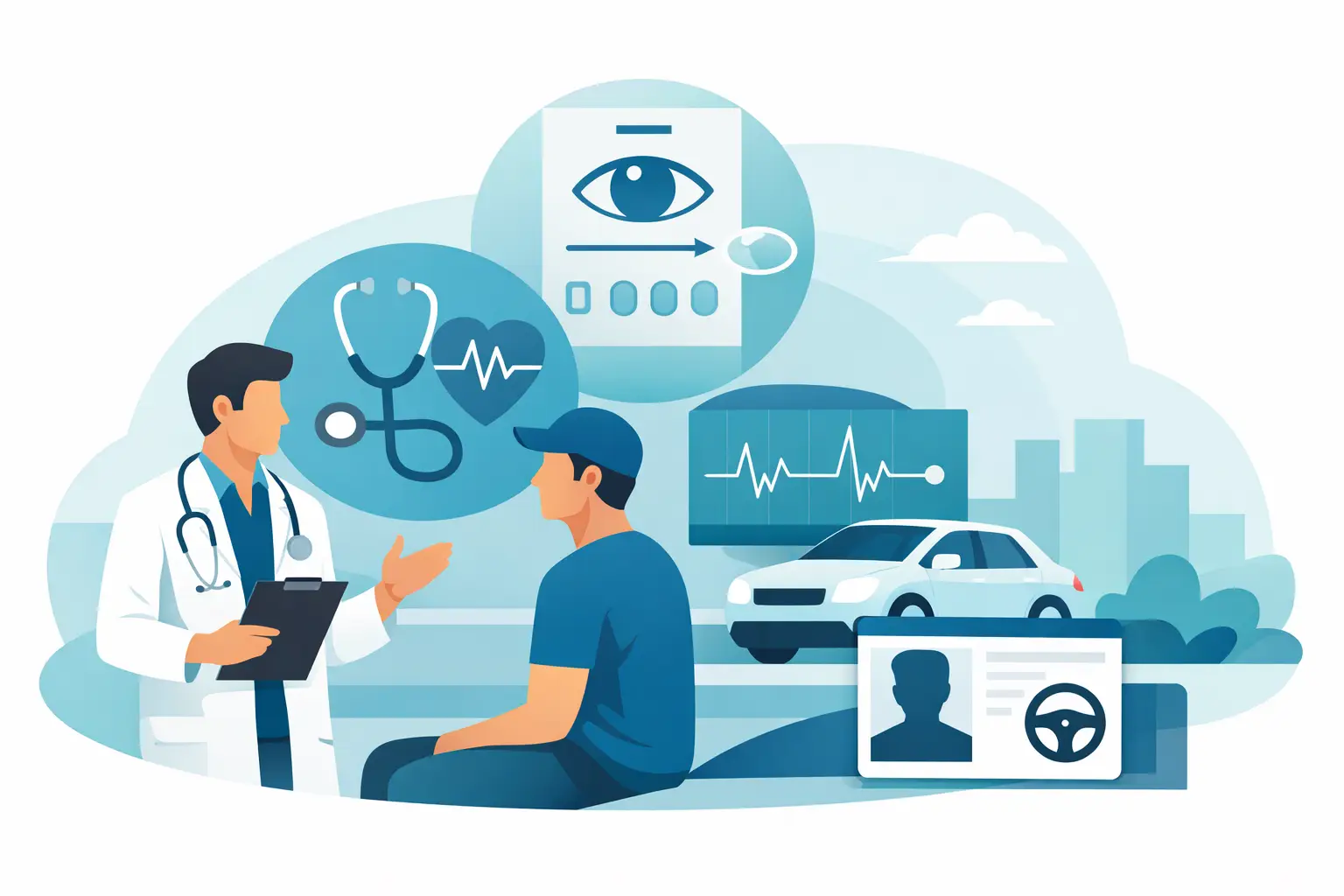
A driver’s medical exam typically includes a review of your medical history, current medications, vision, and any symptoms or conditions that may affect safe driving. It also includes a physical assessment focused on function rather than a full head-to-toe annual physical. Depending on your age, license class, medical history, and the form being completed, the visit may also involve blood pressure measurement, cognitive screening, or follow-up testing.
This is an administrative medical service, but it is still a clinical assessment. The physician is expected to document relevant health information accurately and complete the required forms based on medical findings. In some cases, the form can be completed during one visit. In others, more information is needed before the paperwork can be finalized.
Why these exams are required
A driver’s medical exam is generally requested when a licensing authority needs confirmation that a person is medically fit to drive. That may happen because of age-based renewal rules, the type of license you hold, or a reported medical condition. Commercial drivers are often assessed more closely because they spend more time on the road and may operate larger vehicles or transport passengers.
The goal is public safety, but that does not mean every diagnosis causes a problem. Many people with controlled blood pressure, diabetes, mild vision correction, or stable chronic conditions continue driving without issue. What matters is whether the condition is managed and whether it could impair judgment, alertness, movement, or vision behind the wheel.
Medical history review
One of the main parts of what is included in a drivers medical exam is a detailed health history. The physician will usually ask about heart disease, high blood pressure, diabetes, seizures, stroke, sleep apnea, neurological disorders, mental health conditions, and any history of fainting or unexplained loss of consciousness.
You may also be asked about surgeries, hospitalizations, substance use, and whether you have had recent changes in health. This part matters because some conditions are stable for years, while others may require closer review. A diagnosis by itself is not always the deciding factor. Frequency of symptoms, treatment adherence, and current level of control often carry more weight.
If you have paperwork from a specialist, it can help to bring it. That is especially true if you are being monitored for a heart condition, neurological issue, insulin-treated diabetes, or a sleep disorder. Up-to-date information can make the assessment more efficient.
Medication review
The exam also includes a review of current medications. Some medications can affect alertness, reaction time, coordination, or vision. This does not automatically mean you cannot drive, but the physician needs to understand what you take, why you take it, and whether it causes side effects.
Prescription sleep aids, strong pain medications, certain anti-anxiety medications, and some seizure treatments may require discussion. The key issue is not just the name of the drug. The doctor will also consider dosage, timing, recent changes, and how you function on it in daily life.
If you take several medications, bring a current list. That can save time and reduce the risk of errors on your form.
Vision screening
Vision is a core part of any driving medical. Safe driving depends heavily on being able to read signs, judge distance, notice hazards, and respond to changing road conditions. During the exam, the physician may test visual acuity and ask whether you use glasses or contact lenses.
If you wear corrective lenses for driving, that should be brought to the appointment. In some cases, a more detailed eye exam from an optometrist or ophthalmologist may be needed, especially if there are concerns about cataracts, glaucoma, double vision, reduced visual fields, or progressive eye disease.
This is one of the areas where follow-up is common. A basic in-office screen may be enough for many patients, but not for everyone.
Physical assessment
A driver’s medical exam usually includes a focused physical assessment. This often involves checking blood pressure, pulse, and general physical function. The doctor may assess mobility, balance, coordination, strength, and range of motion if there is any concern that a physical limitation could affect driving.
For example, if someone has arthritis, a previous injury, or a neurological condition, the physician may want to know whether they can turn their head, move their feet quickly, grip the steering wheel, and enter or exit the vehicle safely. For commercial drivers, the threshold for concern may be different because the physical demands of operating a larger vehicle are higher.
Again, this is not meant to be excessive. It is meant to answer a practical question: can the person operate a vehicle safely and reliably?
Cognitive and neurological review
Some driver medical exams include screening for memory, attention, judgment, or neurological symptoms. This does not happen in every appointment, but it may be relevant for older adults, patients with a history of stroke, seizure disorder, head injury, dementia, or other conditions that could affect decision-making.
The doctor may ask simple orientation questions, review any recent episodes of confusion, or discuss whether there have been changes noticed by family members. If there are concerns, further evaluation may be needed before the form can be completed.
This can be one of the more sensitive parts of the process. It is not about age alone. It is about function and safety. Many older adults pass these assessments without difficulty, while younger patients with certain medical issues may need closer review.
Common conditions that may need closer attention
Certain conditions come up often in driver medical exams because they can affect driving in specific ways. Sleep apnea may raise concern if it causes significant daytime sleepiness. Diabetes may require review if there is a history of severe low blood sugar. Cardiac conditions matter if they involve fainting, chest pain, or unpredictable symptoms. Seizure disorders are assessed based on control and timing of the last event.
Mental health conditions can also be relevant, but not in a broad or automatic way. The issue is whether symptoms or treatment side effects impair safe vehicle operation. Many people with anxiety, depression, or other treated mental health conditions continue to drive safely.
That is why these exams are individualized. Two patients with the same diagnosis may not have the same outcome.
Forms, documentation, and timing
A major part of the visit is the required documentation. The physician completes the medical form based on your history, exam findings, and any available test results or specialist reports. Accuracy matters, so if information is incomplete, the form may be delayed until supporting records are reviewed.
Patients are sometimes surprised that the appointment is not always a one-step signoff. If your blood pressure is very high that day, your vision screen is unclear, or you report symptoms that need clarification, the doctor may request follow-up. That does not necessarily mean bad news. It often means the form needs enough detail to be completed properly.
Bringing your license paperwork, glasses, medication list, and any relevant specialist documents can make the process smoother.
What the exam does not usually include
A driver’s medical exam is not the same as a full preventive checkup. It is usually more focused and purpose-specific. You should not expect a complete annual physical, broad lab work, or extensive testing unless something in your history or exam suggests it is needed.
That said, sometimes the assessment identifies a health issue that deserves follow-up. Elevated blood pressure, uncontrolled diabetes, vision changes, or untreated sleep symptoms may come to light during the visit. When that happens, it can be helpful. The exam is about driving safety, but it can also highlight health concerns that need attention.
How to prepare for your appointment
The best way to prepare is to come with current information. Bring your form, photo ID, glasses or contacts if you use them for driving, and a list of medications. If you have seen a specialist for a condition that could affect driving, bring that documentation if available.
It also helps to be direct about symptoms. If you have had dizziness, blackouts, daytime sleepiness, or medication side effects, mention them clearly. A reliable assessment depends on accurate information. Trying to minimize an issue can delay the process if further clarification becomes necessary later.
At clinics such as Twin Mills Medical Center, these visits are typically handled as structured medical appointments with a focus on efficiency, form completion, and practical next steps.
A driver’s medical exam is usually less complicated than people expect. If you arrive prepared and your health information is current, the appointment often moves quickly and gives you a clear answer on what happens next.
Leave a Reply