
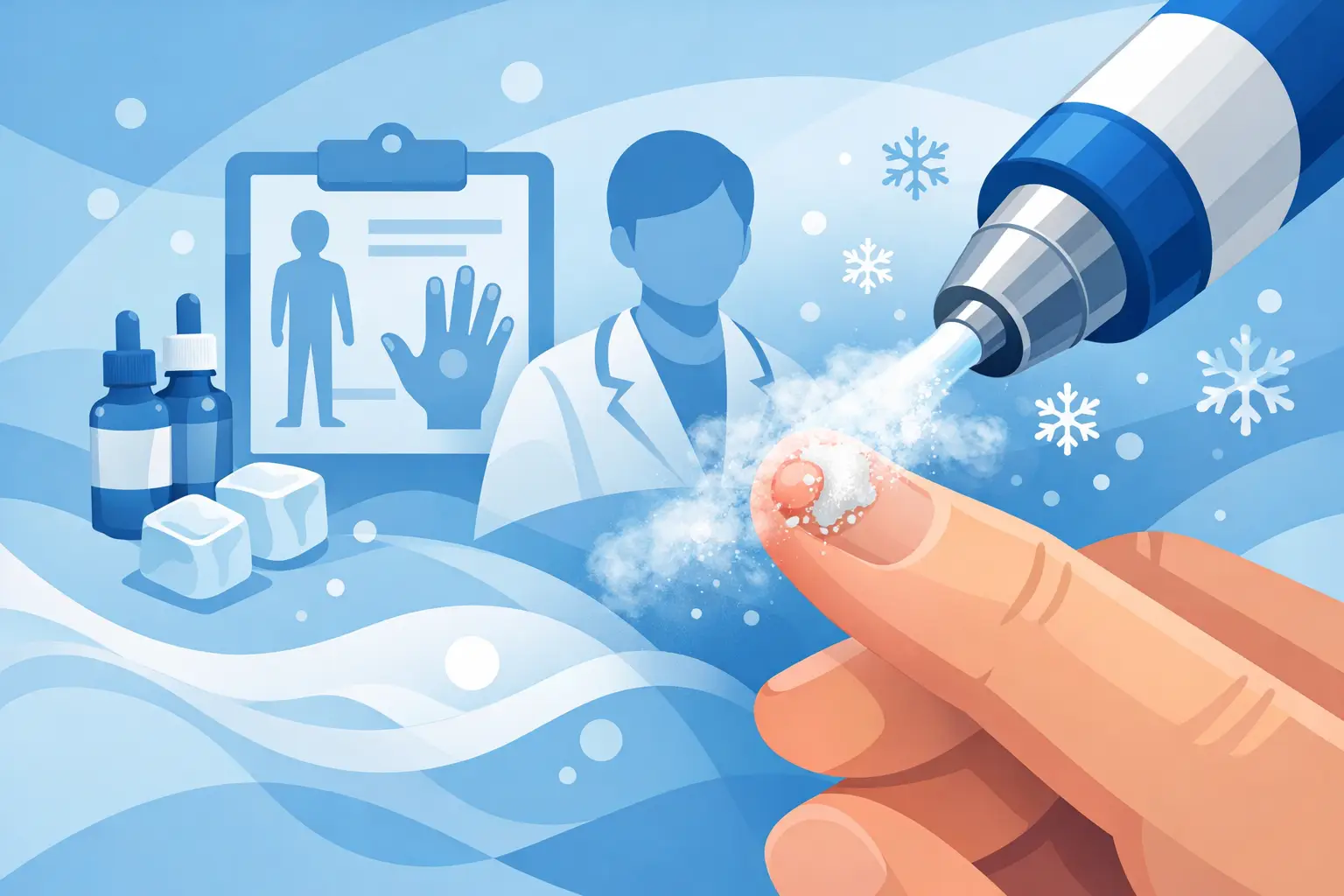
Warts are common, but that does not make them less frustrating. They can catch on clothing, become painful with walking or shaving, and linger for months despite drugstore treatments. For many patients, cryotherapy for wart removal is a practical next step when a wart is persistent, bothersome, or located in an area that gets frequent irritation.
Cryotherapy uses extreme cold to destroy wart tissue. In a medical setting, this is typically done with liquid nitrogen applied directly to the wart for a short period. The goal is to freeze the abnormal skin cells so the wart gradually breaks down and clears as the skin heals. It is a straightforward treatment, but results depend on the type of wart, where it is located, how long it has been present, and how your skin responds.
How cryotherapy for wart removal works
Warts are caused by certain strains of human papillomavirus, or HPV, which affects the outer layer of skin. Because the virus lives in the skin itself, treatment is aimed at destroying the infected tissue. Cryotherapy does this by freezing the wart and the surrounding area in a controlled way.
During treatment, the frozen tissue may turn white for a few moments, then thaw. Depending on the size and depth of the wart, your clinician may repeat the freeze-thaw cycle during the same visit. This process creates local tissue damage, which helps remove the wart over time and may also stimulate your immune system to recognize and fight the virus in that area.
Not every wart clears after one treatment. Some respond quickly, while others need several visits spaced over a number of weeks. Plantar warts on the bottom of the foot, for example, often take longer because the skin there is thicker and the wart may be pressed inward by body weight.
Which warts may be treated with cryotherapy
Cryotherapy is commonly used for common warts on the hands, fingers, arms, or knees, as well as some plantar warts and flat warts. It can be a good option when the wart is easy to identify, is causing discomfort, or has not improved with over-the-counter products.
That said, not every skin growth should be frozen. A lesion that is changing in color, bleeding easily, growing quickly, or has an uncertain diagnosis should be assessed carefully before treatment. What looks like a wart is not always a wart. This is one reason an in-person medical evaluation matters, especially for adults with a new skin lesion or for anyone with diabetes, circulation issues, or reduced sensation in the feet.
Children and adults can both be candidates for treatment, but the approach may differ. Some patients prefer to wait if a wart is small and not causing symptoms, since many warts eventually go away on their own. Others want treatment sooner because the wart is painful, spreading, or interfering with daily activities.
What to expect at your appointment
A visit for wart assessment is usually brief and focused. Your clinician will examine the area, confirm whether it appears to be a wart, ask how long it has been present, and review any previous treatment attempts. This helps determine whether cryotherapy is appropriate and how aggressive treatment should be.
If you go ahead with treatment, the area may be cleaned first. Liquid nitrogen is then applied directly to the wart using a spray device or cotton-tipped applicator. The freezing itself is fast, often lasting only a few seconds at a time, but it can sting or burn during and shortly after the application.
For smaller warts, treatment may be over quickly. Larger or deeper warts may need longer freezing or more than one freeze cycle. In some cases, the thick outer surface of a wart may be pared down before treatment to improve contact with the frozen area. This is more common with plantar warts.
Most patients can return to normal activities right after the visit. If the wart is on a pressure point such as the sole of the foot, there may be short-term soreness with walking.
Does cryotherapy hurt?
The discomfort is usually brief, but it is real. Most people describe it as a sharp stinging, burning, or intense cold sensation that peaks during treatment and then fades. The area may stay tender for several hours, and sometimes into the next day.
Pain level depends on the location and size of the wart. Fingers, nail folds, and the soles of the feet can be more sensitive. Young children may have a harder time tolerating treatment, while many adults find it manageable without any special preparation.
If you are treating a plantar wart and spend long hours on your feet, it helps to plan for mild soreness afterward. Wearing comfortable shoes and avoiding friction on the area can make the first day easier.
What healing looks like after treatment
After cryotherapy, the treated skin may become red, swollen, or mildly sore. A blister can form within several hours or by the next day. This can be clear or blood-filled, and it is usually part of the normal healing response.
Over the next several days, the blister may dry out and a scab may develop. The wart tissue then loosens and eventually comes away. Healing time varies by location, but many patients notice visible changes within one to two weeks. Full clearance may take longer, especially if repeat sessions are needed.
Basic aftercare is usually simple. Keep the area clean and dry. If a blister forms, protect it from rubbing. Do not intentionally break it open unless you have been specifically advised to do so. If the blister opens on its own, wash gently with soap and water and cover it with a clean bandage if needed.
Temporary changes in skin color can happen after treatment, especially in patients with darker skin tones. In some cases, the treated area may heal lighter or darker than the surrounding skin for a period of time. Scarring is uncommon when treatment is done carefully, but it is possible.
When cryotherapy is a good option and when it may not be
Cryotherapy for wart removal is often chosen because it is quick, done in the office, and does not require daily application of a medication by the patient. That convenience matters for busy adults, families, and anyone who wants a medical treatment plan rather than weeks of trial and error at home.
Still, it is not the right answer for every situation. Some warts are small, painless, and likely to resolve without intervention. Some are so thick or widespread that a combination of treatments may be more effective. If a wart is close to the nail, on the face, or in a sensitive area, the treatment plan may need more caution to reduce the chance of pain, skin damage, or cosmetic changes.
Patients with poor circulation, certain nerve conditions, or healing problems may need a different approach. If you are unsure whether your skin lesion is a wart, that uncertainty should be addressed before freezing is considered.
How many treatments are needed?
This is one of the most common questions, and the honest answer is that it varies. Some common warts improve after one session. Others need two to four treatments, sometimes more. Plantar warts are often more stubborn and may need repeated visits scheduled several weeks apart.
Response also depends on how long the wart has been there and whether there are multiple lesions. A newer, smaller wart may clear much faster than a deep plantar wart that has been present for many months. If a wart is not responding as expected, your clinician may reassess the diagnosis or discuss other treatment options.
When to seek follow-up care
Some redness, tenderness, and blistering are expected. You should seek medical advice if you develop severe pain, spreading redness, pus, fever, or delayed healing. Follow-up is also appropriate if the wart remains after treatment, returns after seeming to clear, or if new lesions develop nearby.
If the treated area was not definitely a wart to begin with, ongoing changes after treatment should also be reviewed. A skin lesion that does not behave like a typical wart deserves a closer look.
For patients who want a simple office-based treatment, cryotherapy can be an efficient option with a clear recovery process and minimal downtime. The best next step is a proper assessment, because successful treatment starts with making sure the lesion is truly a wart and choosing an approach that fits its location, size, and your day-to-day needs.
Leave a Reply