A workplace injury can create two immediate concerns: getting the right medical care and making sure the injury is documented clearly. A WSIB medical assessment clinic helps Ontario workers address both. The visit focuses on assessing the injury or illness, outlining appropriate treatment, documenting functional limits, and supporting the information needed for a Workplace Safety and Insurance Board claim.
For someone dealing with pain, reduced mobility, or uncertainty about returning to work, timely assessment can make the next steps clearer. It can also help employers understand what duties may be appropriate while recovery is underway.
When to Visit a WSIB Medical Assessment Clinic
A WSIB assessment may be appropriate after an injury or illness that happened at work, including a sudden accident or a condition that developed over time. Common examples include back or neck strain from lifting, a slip or fall, a repetitive-use injury, a cut or burn, or a workplace incident that causes pain or limits normal movement.
You should seek medical attention promptly when an injury needs assessment, even if symptoms seem manageable at first. Some injuries become more difficult to treat when pain, swelling, stiffness, or weakness is ignored. Early documentation can also provide a clearer clinical record of what happened, when symptoms began, and how the injury affects your ability to work.
A clinic assessment is not a decision about whether a WSIB claim will be approved. WSIB makes decisions about claim eligibility and benefits. The healthcare provider’s role is to assess your medical condition, provide treatment recommendations, document relevant findings, and complete appropriate medical reporting where required.
Urgent symptoms need a different level of care. Seek emergency care for severe bleeding, chest pain, trouble breathing, loss of consciousness, major fractures, serious burns, or any injury that may be life-threatening.
What Happens During a WSIB Medical Assessment
The appointment begins with a discussion of the workplace incident or the work activities connected to your symptoms. Be ready to explain when the injury occurred, what you were doing at the time, what symptoms started afterward, and whether you have been able to continue working.
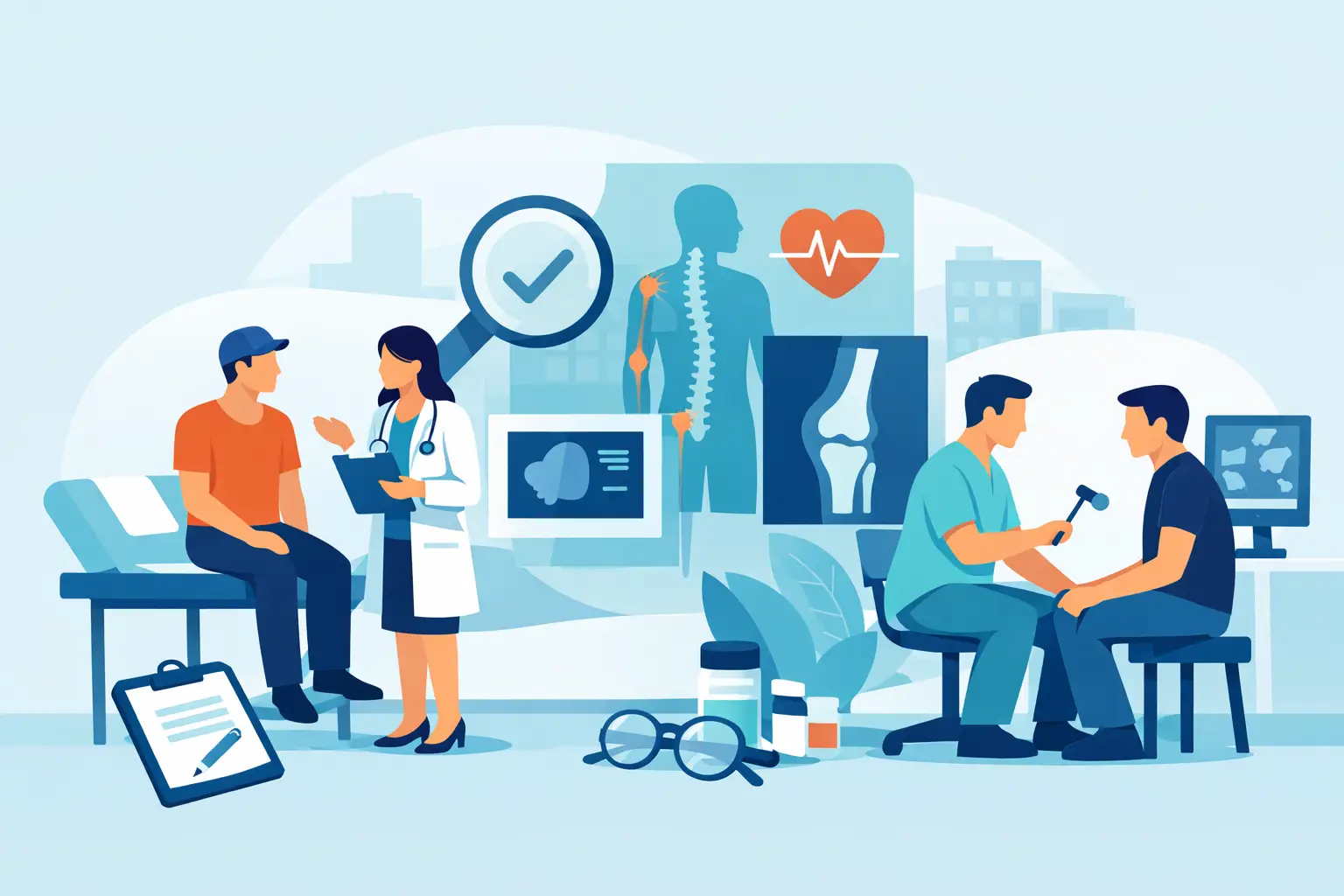
The clinician will review your medical history as it relates to the injury and perform an examination. Depending on the concern, this may include checking movement, strength, sensation, swelling, tenderness, balance, or the condition of a wound. The goal is to understand the injury, rule out concerns that need urgent investigation, and determine a reasonable care plan.
That plan may include medication advice, wound care, imaging or specialist recommendations, modified activity, follow-up care, or rehabilitation. For musculoskeletal injuries, physiotherapy may be recommended to help restore movement, manage pain, and build capacity for a safe return to regular duties.
The assessment may also address functional abilities. This means looking at what tasks you can safely do at the moment, rather than simply labeling you as able or unable to work. For example, a worker recovering from a shoulder injury may be able to perform desk-based duties but not repetitive overhead lifting. Functional guidance can help support an earlier, safer return to appropriate work when modified duties are available.
Information to Bring to Your Appointment
Clear information helps the clinician assess the situation accurately and complete paperwork efficiently. Bring your health card, any WSIB claim number you have received, and details of the employer or workplace where the incident happened. If your employer has provided a functional abilities form or other paperwork, bring that as well.
It is also helpful to bring a list of current medications, details of previous treatment for the same injury, and any reports from a hospital, urgent care center, physiotherapist, or specialist. If you have already reported the injury to your employer, be prepared to share the date of the report and the name of your workplace contact if known.
Before the visit, write down the physical parts of your job. Include lifting requirements, standing or walking time, computer use, driving, repetitive movements, climbing, bending, and any equipment you operate. Specific details are more useful than saying your work is “physical.” They help the clinician give practical recommendations that reflect your actual duties.
Medical Forms and Workplace Communication
WSIB-related forms are part of the process, but they should never distract from care. Accurate medical information supports everyone involved: the worker, employer, insurer, and treating team. Forms may document the diagnosis, treatment plan, expected recovery needs, and temporary work restrictions or abilities.
A functional abilities form is especially useful when a worker can return to some duties but needs short-term adjustments. Recommendations may address lifting limits, reduced hours, avoiding repetitive motions, limiting standing, or taking scheduled breaks. These recommendations depend on the injury, examination findings, and the nature of the job.
Modified work is not always possible, and not every injury has a predictable recovery timeline. A clinician cannot guarantee when someone will be fully recovered. Recovery can depend on the severity of the injury, the demands of the job, access to treatment, previous health conditions, and how symptoms change over time. Follow-up appointments allow the care plan and work recommendations to be updated when needed.
Why Timely Follow-Up Matters
A single assessment may be enough for a minor injury that improves quickly. Other conditions need follow-up, particularly when pain persists, mobility remains limited, treatment has not helped, or work duties are worsening symptoms.
Follow-up care creates a current record of recovery and gives the clinician an opportunity to reassess function. This can be important when restrictions need to be extended, reduced, or changed. It also helps identify when a referral, diagnostic test, or a different treatment approach may be needed.
Workers sometimes wait because they do not want to miss work or worry that reporting pain will create difficulty at the workplace. Delaying care can make communication harder and may allow a treatable issue to become more limiting. Seeking an assessment is a practical step toward understanding the injury and making decisions based on medical findings rather than guesswork.
Care That Supports Recovery and Return to Work
A WSIB medical assessment clinic should provide clear, respectful care during a stressful situation. At Twin Mills Medical Centre, WSIB assessments and medical forms are part of a broader outpatient care model that can also support follow-up treatment and rehabilitation needs in one location.
The right next step depends on the injury. Some patients need a same-day assessment and basic treatment. Others need a care plan, physiotherapy support, medication review, or repeat documentation as they recover. If you have been injured at work, bring the available details, describe your duties honestly, and seek care as soon as you can so your recovery plan can start with a clear clinical assessment.
Leave a Reply