You wake up with a fever, your child has an earache, or you need a prescription renewed before work. In moments like these, the question is practical, not theoretical: walk in clinic vs family doctor – which one should you use, and when?
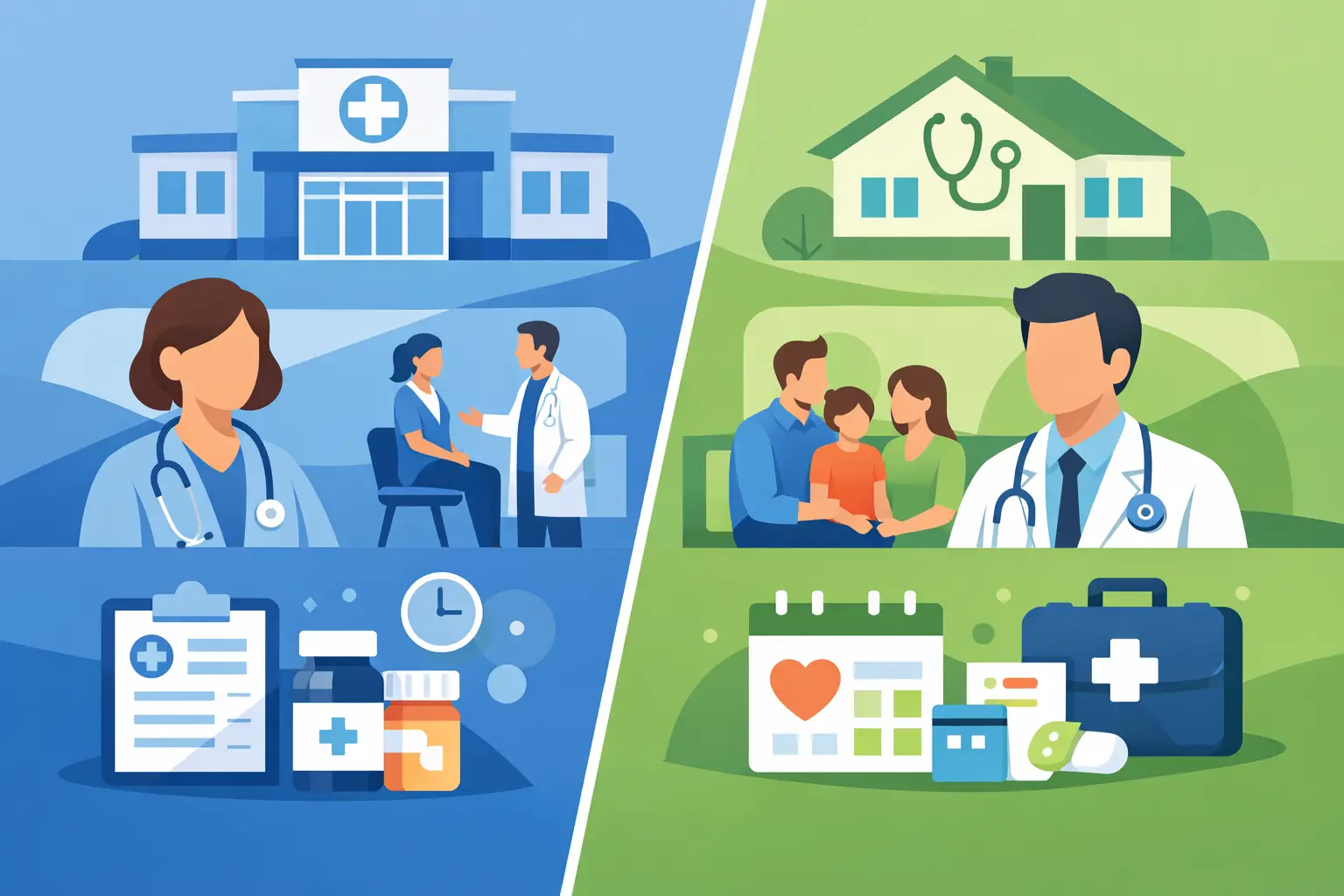
For most people, the answer is not one or the other forever. It depends on the type of care you need, how quickly you need it, and whether the issue is a one-time problem or part of a bigger health picture. Both play an important role. The key is knowing what each setting is designed to do well.
Walk in clinic vs family doctor: the basic difference
A family doctor is your main provider for ongoing primary care. This is the clinician who gets to know your medical history, follows your health over time, manages chronic conditions, orders preventive screening, and helps coordinate next steps when you need specialist care or longer-term treatment.
A walk in clinic is built for access. It is generally the right choice when you need prompt assessment for a minor illness, infection, rash, pain issue, or another non-emergency concern that should not wait days or weeks. It is focused on same-day or near-term care rather than long-term follow-up.
That difference matters. A family doctor provides continuity. A walk in clinic provides convenience and speed. Good healthcare systems need both.
When a family doctor is usually the better choice
If the concern is ongoing, recurring, or connected to your broader health history, your family doctor is usually the best place to start. That includes annual checkups, blood pressure or diabetes management, mental health follow-up, preventive care, medication reviews, and symptoms that have developed gradually over time.
Family medicine works best when there is context. If you have had migraines for years, a thyroid condition, several medications, or a pattern of recurring symptoms, the value is not just in treating today’s complaint. It is in understanding how this issue fits into everything else.
This is especially important for children, older adults, and patients with multiple health concerns. A provider who knows your baseline can often make better decisions, spot meaningful changes earlier, and avoid duplicated tests or conflicting treatments.
Family doctors are also the better fit for care planning. If you need ongoing support for weight management, asthma, menopause symptoms, anxiety, or a return-to-work process, continuity often leads to more efficient and more consistent care.
When a walk in clinic makes more sense
A walk in clinic is usually the practical choice when you need timely care for a minor problem and do not want to wait for the next available routine appointment. Common examples include sore throat, fever, cold and flu symptoms, urinary discomfort, minor skin infections, pink eye, ear pain, mild allergic reactions, or simple injuries that need an assessment.
It can also be useful for straightforward administrative and preventive needs, depending on the clinic. Some walk-in settings provide immunizations, TB testing, medical forms, school or work notes, and other services that patients often need on short notice.
This is where access matters. If your issue is urgent but not an emergency, getting seen quickly can reduce discomfort, prevent delays in treatment, and help you get back to daily life faster.
That said, walk in clinics are not a replacement for emergency care. Chest pain, severe trouble breathing, stroke symptoms, major injuries, or heavy bleeding require emergency evaluation right away.
The trade-off between speed and continuity
The real difference in walk in clinic vs family doctor comes down to trade-offs.
With a walk in clinic, the advantage is speed. You can often be assessed quickly for a minor issue that needs attention now. The trade-off is that the clinician may not know your full history, how your symptoms have changed over months, or what treatments have and have not worked for you in the past.
With a family doctor, the advantage is continuity. The trade-off is that same-day access may be limited, especially during busy periods or for non-urgent concerns.
Neither model is better in every situation. The best option is the one that matches the problem in front of you. If you have a new sinus infection and need prompt treatment, a walk in clinic may be ideal. If you have recurring sinus infections every month, your family doctor is more likely to look at the bigger pattern and decide whether further investigation is needed.
Why continuity matters more than many patients realize
It is easy to think of healthcare as one visit at a time. In practice, many medical decisions become clearer only over time.
A family doctor can compare current symptoms with your previous visits, review trends in blood work, track blood pressure readings, notice weight changes, and follow the effect of medications or therapy. That kind of longitudinal care can improve accuracy and reduce fragmentation.
Continuity also helps with prevention. Screenings, vaccinations, chronic disease monitoring, and lifestyle counseling are easy to postpone when care is only episodic. A regular family doctor relationship makes those pieces less likely to fall through the cracks.
For parents, this can be especially valuable. Children benefit from a provider who tracks growth, development, immunizations, recurring infections, and school-related health concerns over time.
Why access matters just as much
Continuity is important, but access is not a minor issue. Delayed care can create problems of its own.
If you cannot get timely assessment for a painful infection, worsening cough, skin issue, or medication question, waiting may mean extra discomfort, missed work, missed school, or a condition that becomes harder to manage. For many patients, walk-in care fills that gap.
This is why integrated clinics are often the most practical model. When patients can access both family practice and walk-in care in one setting, they do not have to choose between convenience and a primary care relationship. At Twin Mills Medical Center, that kind of coordinated access helps patients handle both routine and time-sensitive health needs in one place.
How to choose the right option for your situation
A simple way to decide is to ask two questions: does this need to be seen soon, and does this issue require someone who knows my history?
If the answer is yes to the first question and no to the second, a walk in clinic is often appropriate. If the answer is no to the first and yes to the second, your family doctor is usually the better starting point. If the answer is yes to both, the best setting depends on what is available and whether follow-up can be arranged.
For example, a simple sore throat with fever may fit well in a walk in clinic. A medication side effect in a patient with several chronic conditions may be better addressed by a family doctor. A flare-up of a known condition may start with whichever clinician you can see first, but it often still needs follow-up with your regular primary care provider.
If you do not have a family doctor
Many patients rely on walk-in care because they do not yet have a regular primary care provider. That is understandable, but it is still worth looking for a family doctor if you have recurring healthcare needs, children, chronic conditions, or ongoing prescriptions.
Walk-in care can manage many short-term issues well. What it cannot always provide is a long-term plan built around your full history. If your healthcare needs are becoming more frequent or more complex, establishing with a family doctor usually improves coordination and follow-up.
In the meantime, it helps to be consistent. Bring an updated medication list, share relevant test results when you have them, and keep track of prior diagnoses and treatments. Even in walk-in care, good information leads to better decisions.
A practical way to think about walk in clinic vs family doctor
Think of a family doctor as the foundation of your healthcare and a walk in clinic as the access point for issues that should be seen promptly. One supports long-term health. The other helps you handle the unexpected.
When care is set up well, these services complement each other rather than compete. You should not have to choose between being known and being seen. The best care experience usually includes both.
If you are deciding where to go today, focus on the nature of the problem, the urgency, and whether follow-up is likely to matter. That one step can save time, reduce frustration, and help you get care that fits the situation.
Leave a Reply