
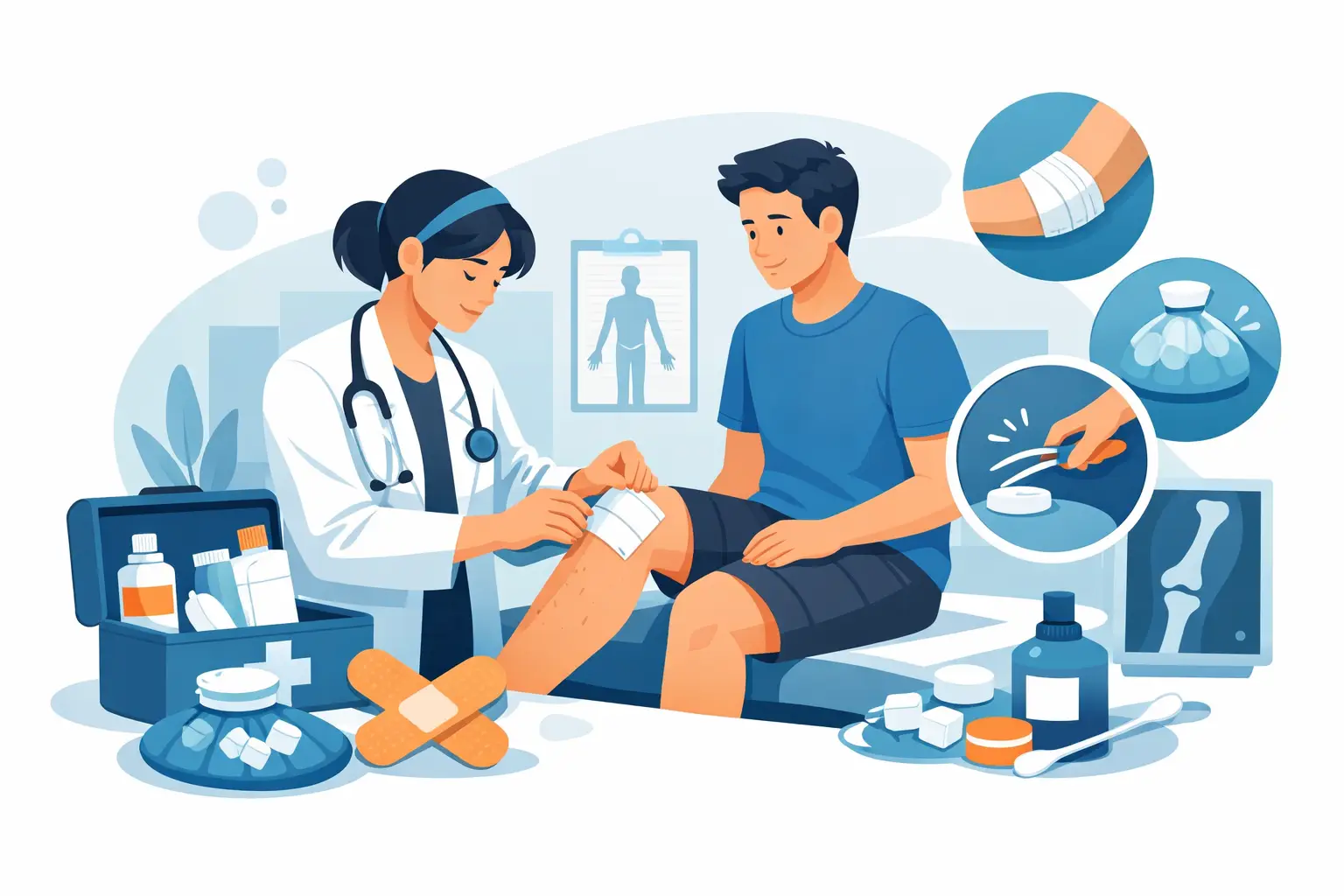
A kitchen knife slips, a child twists an ankle at practice, or you touch a hot pan for a second too long. In moments like these, a clear minor injury treatment guide helps you act quickly, reduce pain, and decide whether home care is enough or a same-day medical visit makes more sense.
Minor injuries are common, but they are not all managed the same way. A bruise may only need rest and observation, while a cut might need cleaning, closure, or a tetanus update. The goal is not to overreact or delay care. It is to treat the injury appropriately, watch for warning signs, and get medical help when the situation goes beyond basic first aid.
What counts as a minor injury
A minor injury usually affects the skin, soft tissue, or a joint without causing heavy bleeding, major deformity, loss of consciousness, or severe functional loss. Common examples include small cuts, scrapes, bruises, mild burns, insect bites, splinters, and mild sprains or strains.
The word minor can be misleading. Some injuries look small at first and become more painful, swollen, or infected over the next day or two. Others occur in places that need more caution, such as the face, hands, eyes, or near a joint. That is why good first aid matters, but so does knowing when to have the injury assessed.
Minor injury treatment guide: first steps that help
For most everyday injuries, start with the basics. Stop the activity, move to a safe area, and look at the injury in good light. If there is bleeding, apply steady pressure with a clean cloth or bandage. If there is swelling, elevate the area if possible.
Wash your hands before touching an open wound. If that is not possible right away, do the best you can with available supplies and clean the area properly as soon as you can. Avoid putting dirt, unwashed fabric, or harsh substances on broken skin.
Pain control matters too. Rest, ice for short intervals, compression when appropriate, and elevation are often useful for bumps, strains, and sprains. For skin injuries, gentle cleaning and protection are usually more helpful than repeated handling.
Cuts and scrapes
Small cuts and abrasions often heal well with basic wound care. Rinse the area under clean running water to remove dirt and debris. Mild soap around the wound is fine, but avoid aggressive scrubbing directly inside the injury, which can irritate tissue.
If bleeding continues, apply firm pressure for several minutes without checking too often. Once the bleeding slows, cover the wound with a clean bandage. Change the dressing daily or sooner if it becomes wet or dirty.
A cut may need medical assessment if the edges are gaping, the wound is deep, bleeding does not stop with pressure, or the injury is on the face, over a joint, or caused by something dirty or rusty. Bites and puncture wounds also deserve extra caution because they carry a higher risk of infection even when the opening looks small.
Bruises and bumps
Most bruises improve with time. In the first 24 to 48 hours, ice can help reduce swelling and discomfort. Use a cold pack wrapped in cloth for short periods rather than placing ice directly on the skin.
A simple bruise should gradually change color and become less tender. If pain is worsening, the area becomes very swollen, or you cannot move the limb normally, the injury may be more than a bruise. A fracture, deeper muscle injury, or joint problem can sometimes be mistaken for a simple bump.
Head bumps need more attention. A minor scalp injury may still require urgent evaluation if there is vomiting, confusion, severe headache, unusual sleepiness, memory problems, or any loss of consciousness.
Sprains and strains
Sprains affect ligaments and strains affect muscles or tendons, but the home care principles are similar at first. Rest the area, apply ice in short sessions, use a supportive wrap if it helps, and elevate the limb. Try to avoid returning to full activity too early, which often delays recovery.
The trade-off with sprains is that complete rest for too long can also lead to stiffness. After the first day or two, gentle movement may help if pain allows. What matters is function. If you cannot bear weight, cannot grip, or the joint feels unstable, you may need an exam and possibly imaging.
An ankle sprain is a common example. Mild cases improve steadily over several days. More significant injuries may involve marked swelling, bruising, or difficulty walking and should not be written off as routine.
Minor burns
For a small burn, cool the area with running water for about 20 minutes as soon as possible. Do not use ice, butter, toothpaste, or home remedies that trap heat or irritate the skin. Remove rings or tight items early if swelling may develop.
After cooling, loosely cover the burn with a clean, nonstick dressing. Small superficial burns may heal with simple care, but burns on the face, hands, feet, genitals, or over large areas need medical attention sooner. The same is true for burns with significant blistering, charred skin, or severe pain.
Chemical and electrical burns are a different category. Even when the skin injury looks limited, the deeper damage can be more serious than expected.
Splinters, bites, and stings
A small visible splinter near the surface can sometimes be removed with clean tweezers after washing the area. If the splinter is deep, breaks apart, or sits under a nail, forcing it out can make things worse. In that case, it is better to have it removed properly.
Insect stings and bites usually cause local redness, itching, and swelling. Cleaning the skin and using a cold compress is often enough. Seek urgent help if there is trouble breathing, facial swelling, dizziness, or a widespread allergic reaction.
Animal and human bites should be treated more seriously than many people expect. Infection risk is high, and the wound may need thorough cleaning, antibiotics, or vaccine review.
When home care is enough and when it is not
A practical minor injury treatment guide should make one point clear: not every injury needs an emergency room, but some should be seen the same day. The middle ground matters. Walk-in medical care is often appropriate when the injury is urgent but not life-threatening.
Home care is often reasonable for small superficial wounds, mild bruises, mild burns, and minor sprains that improve with rest and simple measures. A same-day visit is more appropriate if pain is significant, bleeding is hard to control, swelling is increasing, movement is limited, or the injury may need closure, dressings, medication, or follow-up care.
Emergency care is the right choice for heavy bleeding, visible deformity, deep wounds with exposed tissue, serious head injury symptoms, breathing problems, eye injuries, suspected fractures with major displacement, or any injury involving severe weakness, numbness, or loss of circulation.
Signs of infection or delayed problems
Even a small wound can become a bigger problem after the first day. Watch for increasing redness, warmth, swelling, pus, fever, red streaks, or pain that is worsening instead of improving. These changes should not be ignored.
It is also worth paying attention to healing that stalls. If a cut keeps reopening, a bruise remains unusually painful, or a sprain is not improving as expected, another evaluation may be needed. Sometimes the issue is not poor first aid. The original injury may have been more significant than it first appeared.
Getting the right care quickly
For busy adults and families, access matters almost as much as treatment. A clinic that can assess common injuries, provide wound care, review tetanus status, and help guide next steps can save time and reduce uncertainty. If a minor injury needs rehabilitation support after the initial visit, that continuity can make recovery more straightforward.
At Twin Mills Medical Center, patients often look for that kind of practical access – same-day assessment for common concerns, clear recommendations, and support that fits daily life. That is especially useful when the question is not whether the injury exists, but whether it is safe to wait.
A good rule is simple: if the injury is small and clearly improving, home care may be enough. If you are unsure, symptoms are progressing, or function is limited, getting it checked early is usually the safer and easier choice. Prompt attention to a minor injury often prevents it from becoming a bigger interruption later.
Leave a Reply